How Mark T. Lost It All in a 72-Hour Atm Skimming Spree
- First published:
- 9 min read
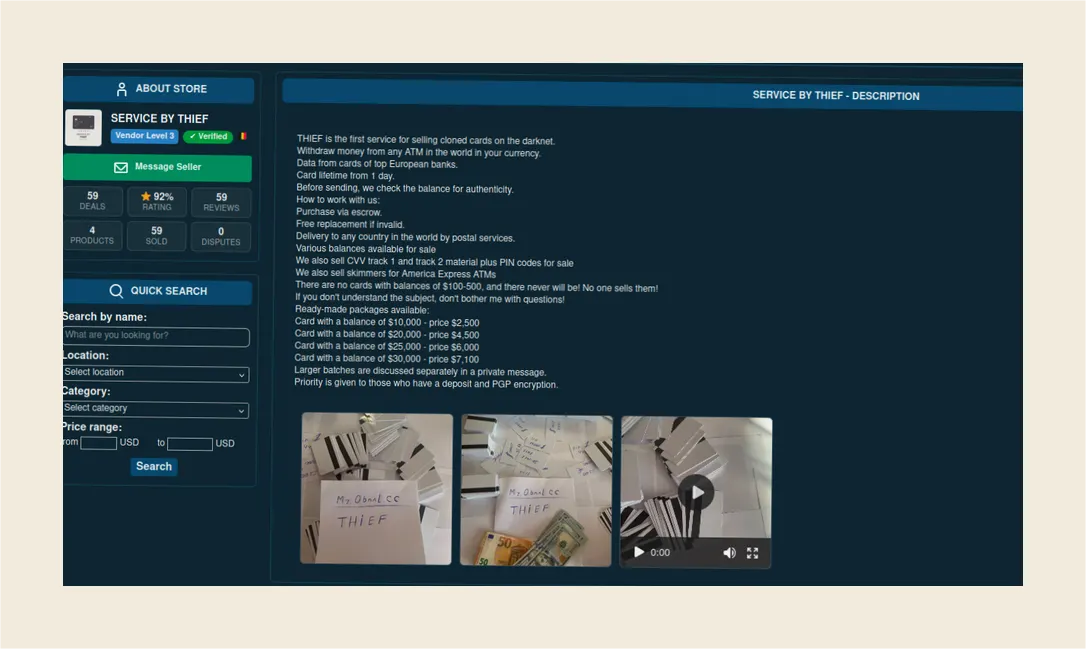
A Tampa Bay man discovered the limits of anonymity when he cashed out cloned debit cards at four ATMs. His scheme collapsed within 72 hours of the first withdrawal, not because of a flaw in the cards, but because of the evidence left behind at every step. The case reveals how modern ATMs act as surveillance hubs, how banks track digital footprints, and why even privacy-focused cryptocurrencies like Monero can’t hide a paper trail when tied to real-world identities. This is the story of a 34-year-old who thought he’d outsmarted the system — until the system outsmarted him.
- Spot a skimmer before you use an ATM
Before using an ATM, it’s wise to inspect it for potential credit card skimmers. Look closely for anything that appears loose, mismatched in color, or oddly bulky around the card reader. A skimmer detector can be helpful, but a simple tug can often reveal if something is amiss. Keep an eye out for hidden cameras as well; small lenses may be positioned near the keypad or above the display. If anything feels off about the machine, it’s best to walk away.
Images of ATM skimmers show devices that can seamlessly blend in, making physical checks essential. To identify a skimmer, try pulling on the card slot, shaking the keypad, and shielding your PIN entry while typing. These quick actions may only take seconds but can save you from prolonged financial troubles.
Mark T. failed to check the ATMs he used, mistakenly believing that cloned cards would function without problems. He was mistaken.
Consider using a skimmer protector or checking for tamper-evident seals before using any ATM.
- Understand the carding chain to avoid it
Carding starts when sensitive information gets compromised. Cybercriminals use devices like skimmers or phishing tactics, often sourcing data from dark web marketplaces. This stolen information ends up on blank cards, which have raised lettering. If a Personal Identification Number is obtained, these cards can facilitate cash withdrawals.
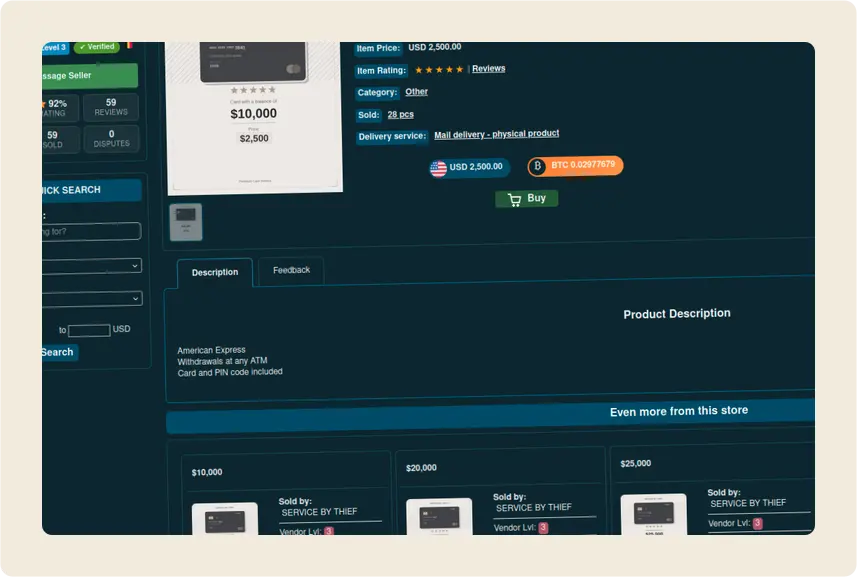
Mark acquired his cards through a dark web platform, a common method for these transactions. He spent 480 in Monero, a cryptocurrency known for its discretion. The cards were sent in plain packaging, designed to mask their true origin. Nonetheless, there exists a significant risk when it comes to cash withdrawals.
Every ATM transaction creates a digital footprint. Records of these transactions, along with timestamps and geolocation, can pinpoint the exact time and place of the crime. Mark mistakenly thought that the anonymity of the dark web would extend to the real world.
This is a common oversight among those engaging in similar illegal acts. The connection between digital evidence and physical actions is crucial to understand.
- Realize why ATM cameras are the silent witnesses
ATMs have evolved beyond simple cash dispensers. They now feature advanced technology that includes high-definition cameras capable of recording at 1080p. Many of these machines are equipped with hidden cameras positioned to catch every angle, ensuring comprehensive surveillance. Each transaction is meticulously logged, detailing the exact time of withdrawals, along with card numbers, amounts, and ATM IDs.
Mark's fourth visit to an ATM would ultimately lead to his capture. The camera recorded his face clearly, without any attempt at disguise. Just 23 seconds of footage was sufficient for authorities to connect him to the crime.
These machines serve a dual purpose: dispensing cash and gathering evidence. Once a cloned card is utilized, the element of anonymity disappears.
Curious about detecting a skimmer on a card reader? Look for anything that seems out of the ordinary, but keep in mind that the real danger might be the camera silently documenting your every action.
- Follow the investigation timeline from fraud to arrest
Over a span of 15 days, the events began on Day 1 with reports of unauthorized withdrawals from banks in Florida, Georgia, and North Carolina by three victims. Quick action was taken by the banks, as they froze the affected cards and initiated investigations.
By Day 3, unusual withdrawal patterns had been detected. Fraud detection systems flagged cloned cards being utilized in multiple states, prompting law enforcement involvement.
Control of the situation was taken over by the U.S. Secret Service on Day 5. They began collecting transaction records from ATMs and reviewing surveillance footage.
A major breakthrough occurred on Day 8. An ATM recording captured a clear image of a suspect named Mark, who was identified via state records. It was revealed that withdrawals occurred in a 40-mile radius from his home.
A warrant was obtained by investigators on Day 12 to examine Mark's online activities, which uncovered his cryptocurrency dealings. This inquiry revealed links to Tor exit nodes tied to the fraudulent operations.
A search warrant was executed by law enforcement at Mark's residence on Day 14. During a search of his residence, authorities seized a laptop containing evidence of his activities on the dark web, cash amounting to $3,200, a magnetic stripe reader, and six blank plastic cards.
Ultimately, on Day 15, Mark was apprehended. He admitted to withdrawing cash using four of the six cards, while the banks had deactivated the other two.
This case highlights the efficiency of contemporary fraud detection systems.
- Learn from Mark’s mistakes to avoid the same fate
Mark's criminal activity was marked by several significant missteps. Analyzing these errors reveals key lessons.
Location Concentration: All cash withdrawals were made within a 40-mile range from his residence. Such clustering can swiftly activate alerts in fraud detection systems. Had he varied the locations, he might have evaded detection.
Failure to Conceal Identity: Mark didn't make any effort to hide his identity during the transactions. This lack of disguise allowed ATM cameras to capture clear images of him, facilitating quick identification.
Using a Centralized Exchange for Crypto: He purchased Monero from a KYC-compliant platform, directly linking his identity to these transactions. Choosing decentralized exchanges could have bolstered his anonymity.
At his residence, law enforcement found various items, including blank cards, a magnetic stripe reader, and a laptop containing incriminating browsing history. Digital footprints can be tough to erase completely.
Cash Found at Home: The $3,200 recovered matched the amounts withdrawn from ATMs, which added weight to the prosecution's case.
Timing of Withdrawals: All transactions occurred within a span of two weeks. Spacing them out could have reduced detection likelihood, yet his actions would still have been captured on camera.
Navigating the complexities of evidence requires understanding all potential risks involved.
- See the numbers behind the downfall
Mark's legal troubles are presented in a straightforward manner:
Four withdrawals were made, totaling $4,900. |-----------------------------|---------------| The count of withdrawals stands at 4. Withdrawn was the sum of $4,900. Cloned cards have a price of $480. | Days from withdrawal to arrest | 15 | The court imposed a prison sentence of 60 months, which is 5 years. Fines and restitution total $22,000. The supervised release lasts for 3 years.
These numbers illustrate a clear narrative. Mark spent $480 on card expenses and illegally withdrew $4,900. He now faces a five-year prison sentence. The financial penalties are just a part of this story.
The data unveils a stark reality. Even seemingly lucrative plans can collapse abruptly when there is enough proof to act upon.
- Accept why crypto didn’t save him
Mark's approach to cryptocurrency had a significant vulnerability. He acquired Monero via a centralized exchange, linking his identity to the transaction through KYC verification. This information was later surrendered to authorities under a court order.
His timing was also unfortunate. Within just two weeks, Mark completed the Monero purchase, made darknet transactions, received a card, and withdrew cash from ATMs. This rapid sequence of events led to strong circumstantial evidence against him.
Moreover, physical evidence played a crucial role. The cards taken by law enforcement had magnetic strips that corresponded with the stolen data. Surveillance footage further placed him at the scene of the crime.
No device could have masked these incriminating signs. The takeaway? Anonymity in crypto relies heavily on the weakest aspect of its system. Knowing how to spot credit card skimmers is irrelevant if you are the one committing fraud. The system is built to catch offenders.
- Apply lessons for security professionals
Mark's experience provides crucial lessons for professionals focused on security and fraud mitigation.
Anti-fraud mechanisms serve as the initial protective barrier. Banks employ techniques like pattern recognition, geolocation parameters, and scoring frameworks to identify questionable transactions automatically. Channeling resources into machine learning for spotting irregularities can yield significant benefits.
Collaboration between physical and digital forensic teams is essential. ATM surveillance footage lacks value without corresponding transaction logs to identify the exact timeline of an incident. Merging these fields is vital for effective case resolutions.
Cryptocurrencies marketed as anonymous are not genuinely private. The entry point, which is tied to KYC exchanges, and the cash exit create a visible pathway. Full anonymity remains out of reach as long as KYC policies are in place.
Educating customers is a pivotal element. Many victims fail to recognize fraud right away. Prompt reporting allows banks to act quickly. This rapid response is crucial in minimizing losses. Banks need to focus on client education as a priority.
Mark's situation illustrates that discussions on cloned cards often overlook the inherent strength of the fraud prevention system.
- Face the verdict and its implications
Mark T. confessed to fraud and money laundering in March 2025, resulting in a 60-month prison sentence imposed by the U.S. District Court for the Middle District of Florida. He will begin a three-year supervised release period following the completion of his prison sentence. A fine of $22,000 must be paid by him, along with restitution to three victims.
Despite not being the main architect of the scheme, Mark still faced severe penalties. Individuals like him often face considerable risks, while those who design such schemes frequently escape justice. This complicates the efforts of law enforcement agencies trying to capture the primary offenders.
Understanding the legal implications is crucial, as even minor participants in illegal acts can face severe repercussions. Taking precautions against credit card fraud becomes meaningless if it leads to criminal prosecution. The risks are substantial, and favorable outcomes are rare.
The system always catches up
Mark T. experienced a notable downfall related to the risks of anonymity online. He believed he discovered a simple method to earn money, yet the existing systems were already in place to apprehend him. Surveillance from ATM cameras and bank fraud detection algorithms ensured each action he took was recorded. Even when using privacy coins like Monero, his identity was not shielded when linked to a tangible purchase.
It is evident that contemporary security measures are more advanced than many criminals anticipate. Gaining insight into how these mechanisms function can benefit anyone, whether you work in security or simply have an interest in the topic. If you are considering illegal activities, keep Mark's fate in mind.
Mark’s cards came from the darknet, specifically from the website where the purchase was made.