Real Counterfeit Money: What You Should Know
- First published:
- 14 min read
Key Tor Services Overview
This selection of services provides essential resources for navigating Tor. Each option offers unique features for enhanced anonymity and security.
The Tor Project
The Tor Project is the official organization behind the Tor software, providing downloads and documentation securely. It offers an onion service for anonymous access to its resources.

Nexus Market
Nexus Market is an active marketplace known for its wide range of digital goods and strong transaction security through multi-signature escrow. It is recognized for reliability and has numerous active vendors.
ums7mctigzemj3thj7nihnbpdb4evkvwvdfd3obodu2iv2q3s522aiyd.onion
Professor Mariarti
Professor Mariarti — A resource for navigating online safety and making profits.
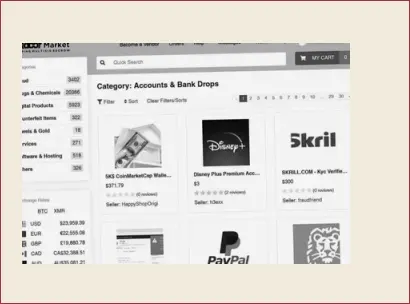
Tor2Door Market
Tor2Door Market — A marketplace prioritizing privacy with user-friendly navigation and secure transactions.
ytjm2aoy6o65si4xs3ltqs5jbkzyefvzlyzi4u3srqlljlcdhd6bojqd.onion
LONELY ROAD
LONELY ROAD — Multilingual marketplace with AI features and diverse product range.
What Is Real Counterfeit Money and How It Differs from Prop Money
Real counterfeit money refers to illegal replicas of genuine currency that are produced with the intent to defraud. These fakes often lack critical security features found in authentic bills, such as watermarks, security threads, or color-shifting ink. For example, a high-quality counterfeit known as "Superdollars" has been noted for its sophistication, making it difficult to distinguish from real U.S. currency (2).
In contrast, prop money is legally produced for use in film and novelty applications. It is designed to mimic real currency but includes disclaimers stating its purpose, such as "For Motion Picture Use Only." This legal distinction is crucial; while counterfeit money is a crime under 18 U.S. Code § 472, prop money is permitted as long as it is not used to deceive (3).
The legal implications of using counterfeit money are severe. In 2023, the U.S. Secret Service made 197 arrests related to counterfeiting, underscoring the risks involved in producing or using fake currency (1). On the other hand, prop money, like RealAged® bills, is widely accepted in productions, including popular shows like "Euphoria," without the associated legal risks (4).
To differentiate between the two, remember: counterfeit money aims to defraud, while prop money serves a legitimate purpose in entertainment. Understanding these differences is essential to avoid legal trouble and to ensure that any replica currency is used appropriately.
Key Visual Features of Real Counterfeit Money vs. Genuine Bills
Identifying real counterfeit money requires understanding its visual features compared to genuine bills. Genuine U.S. currency incorporates several key security elements that most counterfeit bills lack.
Security Features of Genuine Bills
Raised Intaglio Ink: Genuine bills have a texture that can be felt when touched. Counterfeit bills usually lack this tactile quality.
Watermarks: Genuine currency features a watermark that is visible when held up to the light. Commonly, this includes a portrait similar to the one printed on the bill (4).
Security Threads: Embedded within genuine bills, these threads are visible when held up to the light and often feature text. Counterfeit versions often miss this detail or reproduce it poorly (4).
Color-Shifting Ink: On the $100 bill, for example, the bell in the inkwell shifts color when tilted. This feature is challenging for counterfeiters to replicate (4).
Microprinting: Phrases like "THE UNITED STATES OF AMERICA" can be found in small print on denominations $5 and higher, serving as another authenticity marker (4).
Common Flaws in Counterfeit Bills
Counterfeit bills often exhibit several distinctive flaws:
Blurry Portraits: Genuine bills have sharp, clear images. Counterfeit versions frequently have blurred or pixelated portraits.
Missing Fibers: Genuine currency contains red and blue security fibers embedded in the paper, which can be seen under magnification (4). Counterfeit bills often lack these fibers or do not replicate them accurately.
Incorrect Serial Numbers: Serial numbers on counterfeit bills may be poorly printed or inconsistent with the rest of the bill.
Side-by-Side Comparison Table
| Feature | Genuine $20 Bill | Counterfeit $20 Bill |
|---|---|---|
| Raised Intaglio Ink | Present | Absent or poorly done |
| Watermark | Clear, visible | Often missing or unclear |
| Security Thread | Embedded and visible | Poorly replicated or absent |
| Color-Shifting Ink | Present (shifts color) | Absent |
| Microprinting | Clear text | Blurry or absent |
| Security Fibers | Present (red and blue) | Often missing |
Using the "Feel, Tilt, Check" method is recommended to verify authenticity. Feel the paper's texture, tilt the note to observe color-shifting ink, and check for watermarks and security threads under light (5).
Counterfeit detection pens can sometimes produce false results, so it’s best to rely on these security features for accurate identification (6).
Understanding these visual features can help the reader distinguish between genuine and counterfeit money effectively.
How to Spot Counterfeit Money by Touch and Feel
Touching and feeling a bill can reveal important clues about its authenticity. Genuine U.S. currency has distinct texture differences compared to counterfeit bills.
Genuine bills feature raised printing that can be felt when touched. This texture is a result of intaglio printing, which creates a tactile experience that counterfeiters often struggle to replicate. In contrast, counterfeit bills usually feel smooth, lacking this raised quality.
Another notable characteristic is the paper composition. Genuine U.S. currency is made from a unique cotton and linen blend, giving it a distinct feel. Counterfeit bills, on the other hand, are often printed on standard paper, which does not provide the same durability or texture.
Tools for Detection
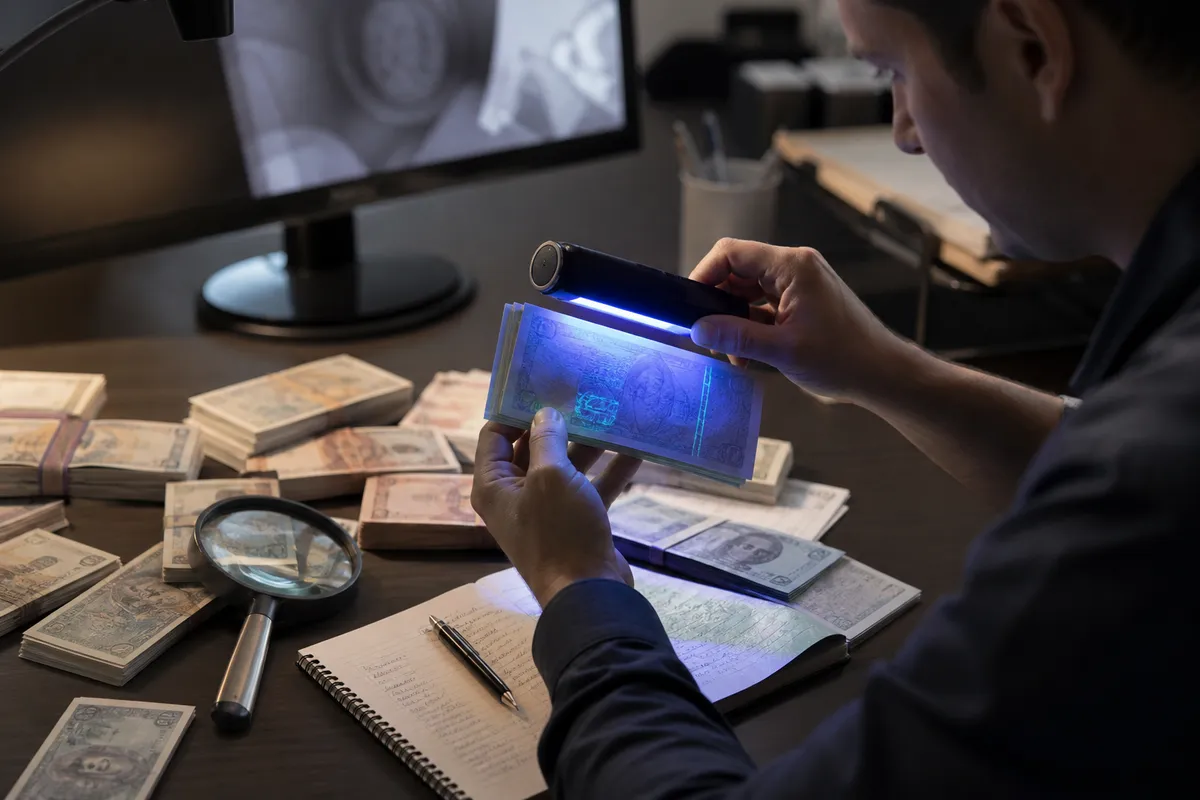
Using specific tools can enhance the ability to identify counterfeit money. A UV light is effective for spotting fluorescent fibers embedded in genuine bills. These fibers appear under UV light and are challenging for counterfeiters to duplicate.
A magnifying glass can also be beneficial, especially for examining microprinting. Genuine U.S. currency includes tiny text, such as the phrases "THE UNITED STATES OF AMERICA" or "USA," which can be found on denominations $5 and higher. This microprinting is often poorly replicated or missing entirely in counterfeit notes (4).
Employing the "Feel, Tilt, Check" method is advisable. Feel the paper's texture, tilt the note to observe any color-shifting ink, and check for watermarks and security threads under light (5).
Detection pens can be misleading, sometimes yielding false results. Therefore, focusing on the security features like watermarks and security threads is recommended (6).
Identifying counterfeit money by touch and feel is a practical approach that, when combined with the right tools, can significantly reduce the risk of accepting fake currency.
Tilt and Light Tests: Simple Ways to Verify Authenticity
How can you quickly verify if a bill is authentic? The tilt and light tests are effective methods for checking key security features of U.S. currency.
Tilt Test: Color-Shifting Ink
The tilt test examines the color-shifting ink, a feature present on certain denominations like the $50 and $100 bills. When you tilt the bill, the ink in the corner changes color. For instance, on a $50 bill, the numeral "50" shifts from a copper color to a gold hue. This color shift is difficult for counterfeiters to replicate accurately, making it a reliable indicator of authenticity (4).
Light Test: Watermark Visibility
Next is the light test, which focuses on the watermark. Genuine U.S. currency includes a watermark that is visible when the bill is held up to a light source. On the $100 bill, the watermark features a portrait of Benjamin Franklin, which matches the printed image. This watermark is a critical security feature that counterfeit bills often lack or reproduce poorly (4).
Automatic Detection by Machines
It’s worth noting that ATMs and bank machines automatically perform these tests. They check for the presence of color-shifting ink and watermarks, ensuring that counterfeit bills are not dispensed to customers. This automatic verification adds an extra layer of security for everyday transactions.
Using the tilt and light tests can help the reader effectively identify genuine currency. These simple methods are accessible and provide immediate results.
Common Types of Counterfeit Money and Their Red Flags
Counterfeit money comes in various forms, each with distinct characteristics. Understanding these types and their red flags is crucial for identifying fake currency.
Types of Counterfeit Money
Superdollars: These high-quality counterfeits are often linked to North Korea. They are known for their sophistication, making them difficult to distinguish from genuine U.S. currency. Superdollars have been involved in large-scale counterfeit operations, contributing to the global issue of fake money (1).
Bleached Bills: This method involves taking lower denomination bills, bleaching them, and then reprinting them as higher denominations. This practice is particularly common in the U.S. and can often go unnoticed by casual observers.
Digital Prints: With advancements in technology, some counterfeiters use digital printing methods to produce fake currency. These bills may lack the tactile features of genuine money, making them easier to identify.
Red Flags to Watch For
Identifying counterfeit money requires a keen eye for detail. Here are some common red flags:
Mismatched Serial Numbers: Genuine bills have serial numbers that match the overall print quality. If the serial numbers appear poorly printed or inconsistent, it’s a warning sign.
Poor Alignment: Genuine currency features precise alignment of images and text. Any misalignment indicates a potential counterfeit.
Missing Holograms: For example, the $100 bill includes a holographic strip that displays images of bells and the number "100" when tilted. Counterfeit bills often lack this feature or replicate it poorly (4).
Awareness of these red flags can save the reader from accepting counterfeit money. Using the right detection methods is essential for ensuring the authenticity of currency.
Legal Consequences of Using or Possessing Counterfeit Money
Possessing or using counterfeit money can lead to severe legal repercussions. In the United States, individuals found guilty of counterfeiting can face penalties of up to 20 years in prison under 18 U.S. Code § 472. This law applies to anyone who knowingly passes, utters, or possesses counterfeit money with the intent to defraud (3). The U.S. Secret Service plays a crucial role in enforcing these laws, having made 197 arrests for counterfeiting in 2023 alone (1).
Internationally, the consequences vary. In the United Kingdom, for instance, individuals can receive sentences of up to 10 years for counterfeiting offenses. European Union countries have differing laws, with penalties ranging from fines to several years in prison, depending on the nation and severity of the crime.
It's essential to distinguish between counterfeit money, which is illegal and intended to defraud, and prop money, which is legal but comes with restrictions. Prop money is often used in film production and entertainment, provided it is clearly marked as “For Motion Picture Use Only.” This labeling helps prevent confusion with real currency and avoids legal issues associated with counterfeiting.
Understanding these legal implications is vital to avoid unintentional involvement in counterfeit activities. Always ensure that any replica currency is used in accordance with the law to prevent serious legal consequences.
How to Safely Buy Realistic Prop Money for Legal Use
Purchasing realistic prop money requires understanding legal requirements and ensuring safety from scams. Prop money must include disclaimers, such as "For Motion Picture Use Only," to prevent misuse. Using prop money for any fraudulent activities is illegal and can lead to severe penalties, including up to 20 years in prison under 18 U.S. Code § 472 (3).
Legal Requirements for Prop Money
When buying prop money, verify that it complies with legal standards. Always check for clear disclaimers indicating its intended use. Legitimate prop money cannot be used for fraud. This distinction protects both the buyer and the seller from potential legal issues.
Trusted Sources for Purchase
To ensure the authenticity and legality of your purchase, buy from trusted sources. Some reputable suppliers include:
Prop Money Inc.: Known for high-quality prop money designed for film and theater.
Realistic Prop Money: Offers a variety of realistic-looking currency for legal use.
Amazon: Purchase from verified sellers to ensure compliance with legal standards.
These sources provide a safer option, reducing the risk of acquiring counterfeit money that could lead to legal repercussions.
Avoiding Scams
Be cautious when shopping for prop money. Avoid sellers who promise “undetectable” money or those that lack proper disclaimers. Such claims often indicate an intention to deceive. Always check for clear indications that the money is for legal use only. If a seller does not provide this information, consider it a red flag.
Before making a purchase, confirm the seller’s reputation through reviews and ratings. Engaging with reputable sources minimizes the chances of falling victim to scams.
Understanding the legal landscape around prop money is crucial to ensuring safe and responsible usage. Following these guidelines will help the reader confidently purchase realistic prop money for legal purposes.
What to Do If You Receive Counterfeit Money
Receiving counterfeit money can be alarming. What should you do next? Here are the steps to take if you find yourself in this situation.
Immediate Actions
Do Not Pass It On: Avoid attempting to use or pass the counterfeit bill further. This action could lead to serious legal consequences, including up to 20 years in prison under 18 U.S. Code § 472 (3).
Note the Details: Try to remember specifics about the transaction. Document who gave you the bill, when and where it happened. This information will be crucial for law enforcement.
Avoid Handling: Minimize contact with the counterfeit note. Use gloves or place the bill in a bag to preserve evidence. This precaution helps maintain the integrity of the evidence for investigations.
Reporting the Incident
Contact Local Law Enforcement: Immediately report the incident to your local police department. They can guide you on the next steps and may initiate an investigation.
Notify the U.S. Secret Service: You can also contact the U.S. Secret Service directly. Their hotline is 1-800-225-5324, and they specialize in investigating counterfeit currency.
Additional Considerations
The U.S. Secret Service seized over $41.5 million in counterfeit currency globally in fiscal year 2023, highlighting the scale of this issue (1). If you receive a suspected counterfeit note, reporting it helps combat this widespread problem.
It's essential to be aware of the security features present in genuine currency, such as watermarks and color-shifting ink, which are often missing or poorly replicated in counterfeit bills (4).
Taking these steps can help protect yourself and contribute to the fight against counterfeit money. Remember, your prompt action can make a difference in addressing this illegal activity.
Common Misconceptions About Counterfeit Money
Confusing Prop Money with Illegal Counterfeit
Many assume all fake-looking money is illegal. Prop money for films or novelty use is legal if clearly marked “For Motion Picture Use Only.” Using it for fraud turns it into counterfeit, which carries up to 20 years in prison under U.S. law (3). Always check for disclaimers before purchase or use.
Relying on Counterfeit Detection Pens
Counterfeit detection pens are popular but unreliable. They only check for starch in the paper, which some counterfeiters bypass. Genuine bills lack starch, but so do high-quality fakes (6). Use the “Feel, Tilt, Check” method instead for better accuracy.
Ignoring the Bleached Bill Trick
Bleached bills are lower-denomination notes chemically altered to look like higher values. They often retain traces of the original print, such as faint numbers or mismatched security features (4). Check for inconsistent serial numbers or missing watermarks.
Assuming All Counterfeit Money Looks Obvious
High-quality counterfeits, like Superdollars, mimic genuine currency closely. The U.S. Secret Service seized over $41.5 million in counterfeit currency in 2023, proving how convincing fakes can be (1). Look for subtle flaws in security threads, color-shifting ink, or microprinting.
Not Reporting Suspected Counterfeit Bills
Some people discard or ignore suspected counterfeit money to avoid trouble. Failing to report it allows counterfeiters to continue circulating fake bills (6). Contact local police or the U.S. Secret Service immediately if you suspect a bill is fake.
Avoiding these mistakes reduces the risk of falling victim to counterfeit schemes.
Key Takeaways
Counterfeit money often lacks security features like holograms, watermarks, or color-shifting ink—always use the “Feel, Tilt, Check” method.
Prop money is legal only if marked “For Motion Picture Use Only”; using it for fraud is a federal crime.
Bleached bills and Superdollars are high-quality fakes that require close inspection to detect.
Possessing or passing counterfeit currency can result in up to 20 years in prison under U.S. law.
Report suspected counterfeit bills to local law enforcement or the U.S. Secret Service immediately.
Start by learning the basics of spotting fakes with Counterfeit 101: Understanding the Basics Without Getting Burned.
Sources and further reading
- Secret Service FY 2023 Annual Report
- Federal Reserve: Estimating the Volume of Counterfeit U.S. Currency in Circulation
- U.S. Currency Education Program: Legal Implications of Counterfeit Acceptance
- U.S. Currency Education Program: Dollars in Detail Guide
- U.S. Currency Education Program: Training Course - Security
- Federal Reserve: How to Determine if a Banknote is Genuine