Discover the Secrets of the Fake 20 Dollar Bill
- First published:
- 14 min read
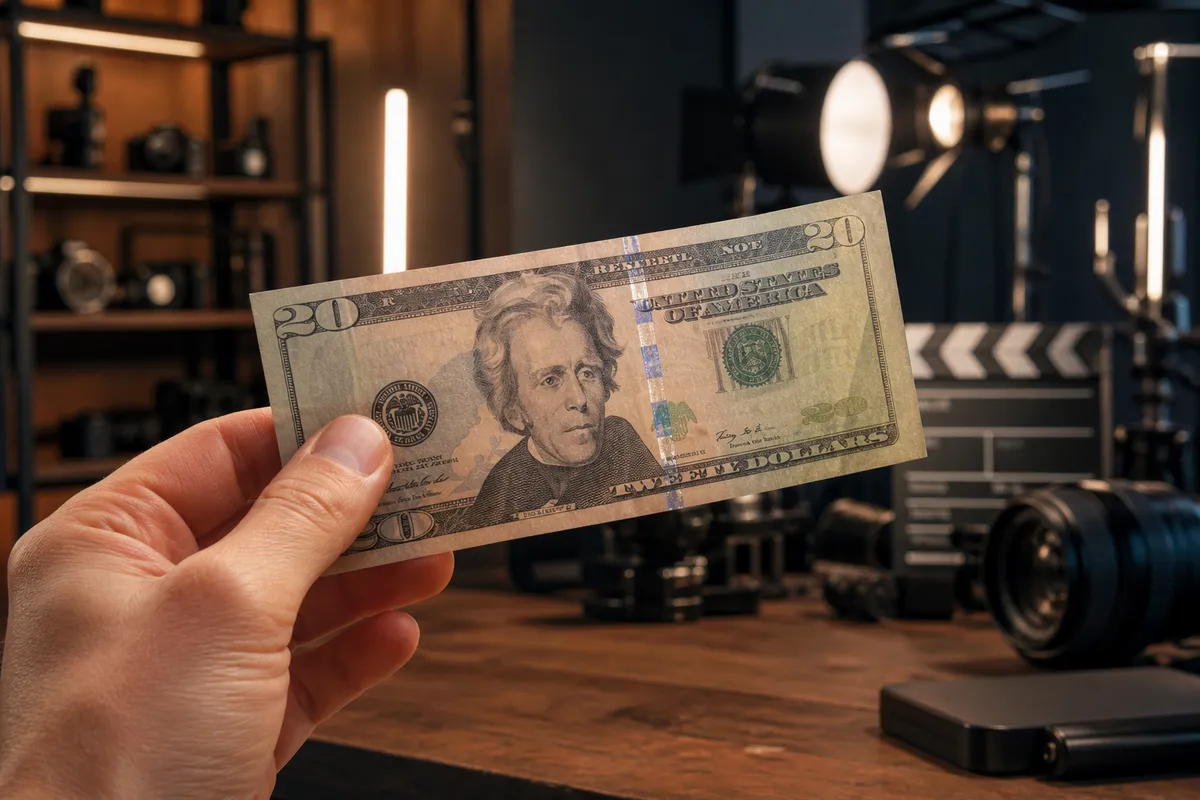
What Is a Fake 20 Dollar Bill and Why Do People Use It?
A fake 20 dollar bill is a non-legal tender replica designed for specific uses, such as props in film production, novelty items, or educational tools. These replicas do not possess the security features found in genuine bills, making them unsuitable for real transactions.
Legal restrictions are strict regarding the use of counterfeit currency. Under 18 U.S. Code § 472, possessing or using counterfeit obligations, including fake 20 dollar bills, can lead to severe penalties, including fines and imprisonment for up to 20 years (2) (3). It is crucial to understand that these fake bills are intended for motion picture use only or for novelty purposes, not for any financial exchange.
Common uses of fake 20 dollar bills include:
Movie Props: Filmmakers often require realistic-looking currency for scenes involving cash transactions. Fake bills help create a believable setting without the risk of using real money.
Pranks: Some individuals use fake currency for harmless pranks, such as surprising friends with a "large sum" of money.
Educational Tools: Teachers may use replicas to demonstrate financial literacy, helping students learn about currency without the risk of handling real money.
When using fake money, it is essential to ensure that it is clearly marked as a replica. This prevents any confusion with actual currency and avoids potential legal issues.
In summary, fake 20 dollar bills serve various purposes, but users must adhere to legal guidelines and ensure their use remains within the boundaries of novelty or film production.
Key Features of a Real vs. Fake 20 Dollar Bill
Identifying a genuine $20 bill involves recognizing specific visual and tactile features. Counterfeit versions often lack these elements, which can help the reader distinguish between real and fake currency.
Key Features of a Genuine $20 Bill
Watermark: A genuine $20 bill has a watermark of Andrew Jackson. This watermark is visible from both sides when held to the light and is located in the blank space to the right of Jackson's portrait (1).
Security Thread: An embedded security thread runs vertically to the left of the portrait. It reads "USA TWENTY" and glows green under ultraviolet light. This feature is often missing in counterfeit bills (1).
Color-Shifting Ink: The numeral '20' in the lower right corner changes color from copper to green when tilted, thanks to color-shifting ink. This is a critical feature that many replicas fail to replicate accurately (1).
Texture: Genuine $20 bills are made from a unique blend of 75% cotton and 25% linen. This composition gives the bill a distinct texture, with raised printing that can be felt by touch (1).
Microprinting: Real $20 bills include microprinted text, such as 'USA20' along the border of the blue 'TWENTY USA' ribbon and additional text below the Treasurer’s signature. Counterfeit bills often overlook this detail (1).
Common Missing Features in Counterfeit Bills
Counterfeit $20 bills frequently lack several critical security features:
Holographic Strip: Authentic $20 notes do not have a holographic strip, which is commonly found on newer denominations but not on the $20 bill.
Ultraviolet Features: Many fakes do not exhibit any luminescent qualities under ultraviolet light, which should reveal the security thread and other features.
Serial Numbers: Counterfeit bills may have serial numbers that are not consistent with those issued by the U.S. Treasury, making them easier to identify.
Verification Method
The U.S. Secret Service recommends using the "Feel, Tilt, Check" method to verify authenticity. Feel for raised printing, tilt to observe color-shifting ink, and check the security thread and watermark with light (4).
Being aware of these features can prevent inadvertent acceptance of counterfeit currency. Always ensure that any fake bills used for novelty or film production are clearly marked as replicas to avoid legal issues.
How to Spot a Counterfeit 20 Dollar Bill (And Why It Matters)
Identifying a counterfeit $20 bill is crucial for anyone handling cash. The U.S. $20 note includes several security features that help distinguish it from fake versions. Understanding these features can prevent the risk of accepting counterfeit currency, which is a federal crime punishable by up to 20 years in prison (2) (3).
Key Security Features of a Genuine $20 Bill
Watermark: A genuine $20 bill features a watermark of Andrew Jackson. This watermark is visible from both sides when held to the light and is located in the blank space to the right of the portrait (1).
Security Thread: An embedded security thread runs vertically to the left of Jackson’s portrait. This thread reads "USA TWENTY" and glows green under ultraviolet light, a feature often absent in counterfeit bills (1).
Color-Shifting Ink: The numeral '20' in the lower right corner changes color from copper to green when tilted, thanks to color-shifting ink. Many replicas fail to replicate this effect accurately (1).
Texture: Genuine bills are made from a unique blend of 75% cotton and 25% linen. This composition gives the bill a distinctive texture, with raised printing that can be felt by touch (1).
Microprinting: Real $20 bills include microprinted text, such as 'USA20' along the border of the blue 'TWENTY USA' ribbon and additional text below the Treasurer’s signature. Counterfeit bills often lack this detail (1).
Common Features Lacking in Counterfeit Bills
Counterfeit $20 bills frequently miss several critical security features:
Holographic Strip: Authentic $20 notes do not include a holographic strip, which newer denominations possess.
Ultraviolet Features: Many fakes do not exhibit luminescent qualities under ultraviolet light, which should reveal the security thread and other features.
Serial Numbers: Counterfeit bills may feature serial numbers that are inconsistent with those issued by the U.S. Treasury, making them easier to identify.
Verification Method
The U.S. Secret Service recommends a simple approach called the "Feel, Tilt, Check" method. Feel for raised printing, tilt the bill to observe the color-shifting ink, and check the security thread and watermark with light (4).
Replicas for props may mimic these security features but are not intended for use as legal tender. Distinguishing between legal props and illegal counterfeits is essential. Always ensure that any fake bills used for novelty or film production are clearly marked as replicas to avoid legal complications.
Legal and Ethical Considerations for Fake 20 Dollar Bills
Understanding the legal framework surrounding fake 20 dollar bills is crucial for anyone considering their use. In the United States, laws regarding counterfeit currency are strict. Under 18 U.S. Code § 472, possessing or using counterfeit obligations, including fake 20 dollar bills, can lead to severe penalties. This includes fines and imprisonment for up to 20 years (2) (3).
Fake money is intended for specific purposes, such as film production or novelty items. It is essential that any prop money is clearly marked as "FOR MOTION PICTURE USE ONLY" or similar wording. This labeling helps differentiate it from genuine currency and prevents misuse.
Using fake currency for transactions or any form of financial exchange is illegal. The U.S. Secret Service reported that in fiscal year 2023, approximately $102 million in counterfeit currency was passed in the United States, with around $14 million specifically in counterfeit $20 bills (5). The consequences of using such currency can be severe and lead to criminal charges.
Common legal uses of fake 20 dollar bills include:
Film Production: Filmmakers require realistic-looking currency to enhance the authenticity of their scenes.
Novelty Items: Some individuals purchase fake bills for pranks or educational purposes.
Educational Tools: Teachers may use replicas to help students learn about currency without the risks associated with real money.
When using fake currency, ensure it is not only marked appropriately but also stored and handled responsibly. Misuse can lead to confusion and potential legal repercussions.
In summary, while fake 20 dollar bills can serve various legitimate purposes, adherence to legal guidelines is essential to avoid serious issues.
Where to Buy Realistic Fake 20 Dollar Bills for Props
Finding realistic fake 20 dollar bills for props involves sourcing from reputable suppliers. Various vendors specialize in prop money, ensuring high-quality products suitable for film production or novelty use. Here are some types of suppliers to consider:
Prop Money Stores
Several online stores focus exclusively on prop money. These retailers often provide detailed information about their products, including the materials and printing techniques used. Look for stores that emphasize quality and legality in their marketing.
Film Industry Vendors
Suppliers that cater to the film industry typically offer high-quality prop money designed for motion picture use. These vendors understand the unique requirements of filmmakers and often provide custom options. Many of them will clearly label their products as "for motion picture use only," helping to differentiate them from counterfeit currency.
Features to Look For
When selecting fake 20 dollar bills, pay attention to these critical features:
High-Quality Printing: Look for bills with sharp, clear images that replicate the details of genuine currency. High-quality printing can enhance the realism of the prop money.
Durability: Ensure the prop money is made from durable materials. Bills that can withstand wear and tear are essential for repeated use, especially in film productions.
Security Features: While prop money should not be used as legal tender, some replicas include features that mimic genuine currency, such as color-shifting ink or microprinting. This can add to the realism in film settings, but it’s crucial that these replicas are clearly marked as fake.
Legal Compliance: Verify that the supplier complies with legal standards for prop money. Ensure the bills are marked with phrases like “motion picture use only” to avoid any potential legal issues.
Before making a purchase, it is wise to read reviews and check the reputation of the supplier. Many online retailers provide customer feedback, which can help in assessing quality and service.
In summary, sourcing realistic fake 20 dollar bills involves selecting reputable suppliers that prioritize quality and legality.
Common Misconceptions About Fake 20 Dollar Bills
Many myths surround the use of fake 20 dollar bills. One common misconception is that these bills can be used in vending machines. In reality, most vending machines and automated systems are designed to detect genuine currency. Fake bills often lack the necessary security features, making them ineffective for such uses.
Another widespread belief is that all replicas of currency are illegal. While it's true that using counterfeit money for transactions is illegal, prop money for film production or novelty use can be legal if it is clearly marked as a replica. According to U.S. law, specifically 18 U.S. Code § 472, penalties for using counterfeit currency can include fines and imprisonment for up to 20 years (2). Therefore, ensuring that prop money is labeled appropriately is crucial to avoid legal issues.
The case involving George Floyd highlighted the serious implications of counterfeit currency use. In 2020, Floyd was accused of using a counterfeit $20 bill, leading to his fatal encounter with law enforcement. This incident underscored the risks associated with counterfeit money and the importance of understanding its legal ramifications.
Understanding these misconceptions can help the reader navigate the complexities of using fake 20 dollar bills. Always remember that while prop money serves legitimate purposes in film and novelty contexts, it should never be mistaken for legal tender.
How Fake 20 Dollar Bills Are Used in Film and TV Production
Fake 20 dollar bills serve several practical applications in film and television production. They are often used in heist scenes, where large sums of cash are needed to create a realistic atmosphere. Filmmakers may stack these bills to simulate cash piles during intense moments. Background props featuring fake money can also enhance the authenticity of a scene, making it more relatable for the audience.
When using prop money, it is crucial to adhere to industry standards. One key guideline is that prop money must not resemble real currency too closely. For example, many prop bills are printed on one side only and feature non-standard serial numbers to avoid confusion with genuine currency. This helps prevent legal issues and ensures that the prop money is used solely for its intended purpose.
Industry Standards for Prop Money
One-Sided Prints: Most prop money is printed on only one side. This ensures it cannot be mistaken for real money during casual encounters.
Non-Standard Serial Numbers: Prop bills typically have serial numbers that do not match those issued by the U.S. Treasury. This reduces the risk of accidental use in transactions.
Labeling: Prop money should clearly state “FOR MOTION PICTURE USE ONLY” or similar wording. This labeling is essential to differentiate it from genuine currency and to comply with legal requirements.
Material and Texture: Quality prop money mimics the feel of real currency, often made from paper that resembles the texture of actual bills. However, it should not contain features like holographic strips or embedded security threads.
According to the U.S. Secret Service, using clearly labeled prop money helps to avoid legal complications associated with counterfeit currency (4).
When considering the use of fake 20 dollar bills in production, always ensure compliance with these industry standards. This approach not only enhances the production's authenticity but also safeguards against potential legal issues.
Common Pitfalls and Misconceptions
Confusing Prop Money with Counterfeit Currency
Many assume any fake $20 bill is illegal. Prop money is legal if clearly marked for film or novelty use, while counterfeit bills are designed to deceive and are prohibited by law (2) (3). Always verify the labeling before purchase.
Assuming All Replicas Have Security Features
Some buyers expect replicas to include color-shifting ink or watermarks. Genuine $20 bills have these features, but prop money should not—doing so risks violating counterfeit laws (1). Look for replicas that mimic appearance but omit protected security elements.
Believing Fake Bills Work in Vending Machines
Vending machines detect genuine currency using UV light, texture, and magnetic ink. Fake $20 bills lack these details and will be rejected (4). Prop money is for visual use only, not transactions.
Ignoring Legal Markings on Prop Money
Unmarked replicas can be mistaken for counterfeit currency. U.S. law requires prop money to be labeled for its intended use to avoid legal consequences (2) (3). Check for phrases like “FOR MOTION PICTURE USE ONLY” before buying.
Overlooking the Risk of Accidental Use
Even with good intentions, unmarked or poorly designed prop money can lead to accidental misuse. In 2023, $14 million in counterfeit $20 bills were passed in the U.S., highlighting the risks (5). Store prop money separately and educate everyone handling it.
Key Takeaways
Fake $20 bills for props must be clearly labeled as “FOR MOTION PICTURE USE ONLY” to stay legal.
Using unmarked replicas for transactions is illegal and punishable by fines or up to 20 years in prison (2) (3).
Prop money should mimic appearance but omit security features like holograms or watermarks.
Vending machines and automated systems will reject fake bills due to missing security elements (4).
Always buy from reputable suppliers to ensure quality and compliance with legal standards.
Next, explore Fake Dollar Bills: Understanding Their Use for deeper insights into legal and practical aspects.
Good to know
Fake 20 dollar bill real or fake
A genuine $20 bill has a security thread that glows green under UV light and reads 'USA TWENTY' (1). It also features a watermark of Andrew Jackson visible when held to the light (1). If these elements are missing, the bill is likely fake. Always use the 'Feel, Tilt, Check' method to verify authenticity (4).
Fake 20 dollar bill worth
A fake $20 bill has no monetary value and cannot be used as legal tender. In 2023, approximately $14 million in counterfeit $20 bills were passed in the U.S., but they remain worthless (5). Only clearly labeled prop money for film or novelty use holds value as a collectible or production tool.
Fake 20 dollar bill serial number
Genuine $20 bills have unique serial numbers issued by the U.S. Treasury. Prop money should use non-standard or fictional serial numbers to avoid confusion with real currency. Never use replicas with authentic-looking serial numbers for legal reasons (2) (3).
How to tell if a 20 dollar bill is fake
Check for the security thread, watermark, and color-shifting ink on the numeral '20' (1). Genuine bills also have raised printing and microprinting, such as 'USA20' along the border (1). If any of these features are missing or altered, the bill is likely counterfeit.
Where to buy prop money for movies
Reputable suppliers specialize in prop money for film production, offering one-sided prints with clear 'FOR MOTION PICTURE USE ONLY' labels. Look for vendors that prioritize legal compliance and high-quality printing. Avoid suppliers that mimic security features like holograms or watermarks (1).
Sources and further reading
- $20 Note | U.S. Currency Education Program
- 18 U.S. Code § 472 - Uttering counterfeit obligations or securities | Cornell Law School
- 18 U.S.C. § 473: Dealing in counterfeit obligations or securities | U.S. House of Representatives
- Decoding Dollars: The $20 | U.S. Currency Education Program
- Estimating the Volume of Counterfeit U.S. Currency in Circulation | Federal Reserve