Counterfeit Money Website: Recognizing Fake Sites
- First published:
- 13 min read
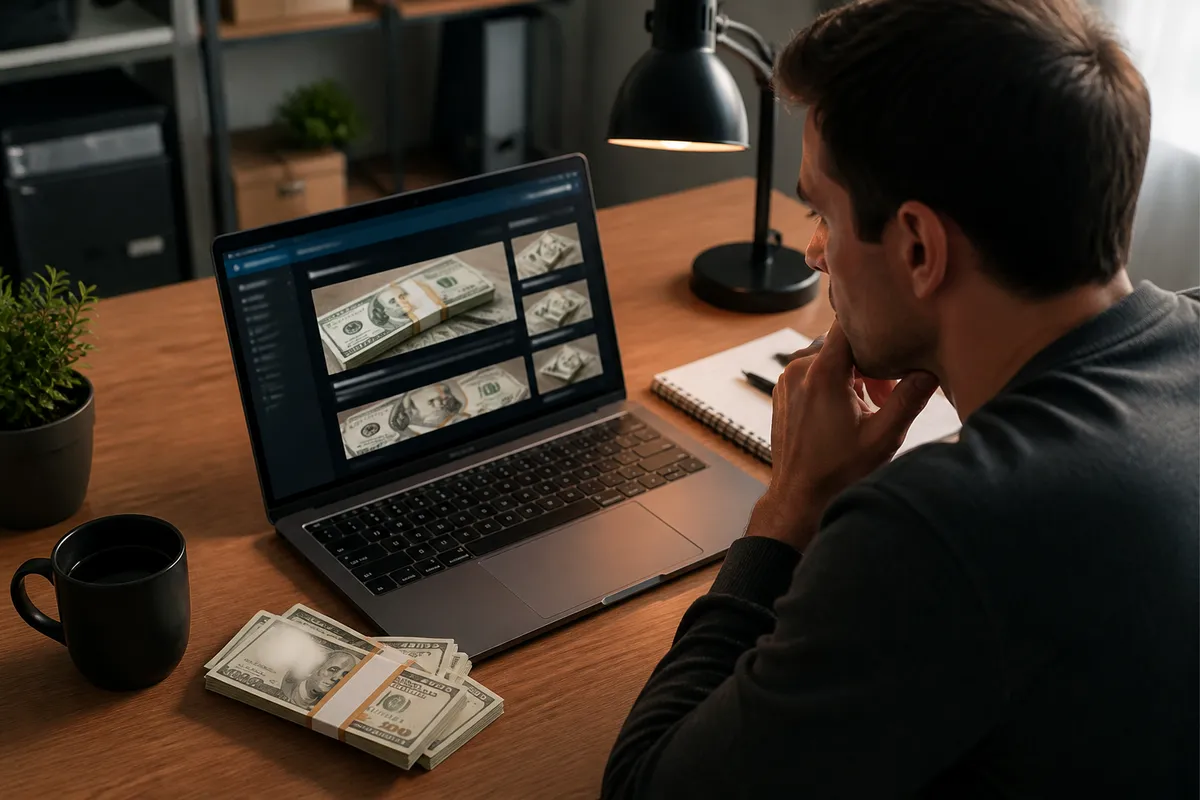
Why Counterfeit Money Websites Are Risky (And Legal Alternatives)
Counterfeit money websites pose significant legal risks. Using or distributing counterfeit currency is a federal crime. Under 18 U.S.C. § 473, dealing in counterfeit obligations, including buying or selling fake money, can lead to severe penalties, including fines or imprisonment for up to 20 years (4) (5). It's crucial to understand the distinction between counterfeit money and prop money.
Counterfeit money is illegal and designed to deceive. In contrast, prop money is legal for film production and novelty use. Prop money must adhere to specific regulations. It must be marked clearly as “FOR MOTION PICTURE USE ONLY” and should not possess the security features found in real currency, such as color-shifting ink or watermarks (2) (1). This distinction helps producers use prop money without violating the law.
For filmmakers, using prop money is a safer choice. It allows for realistic scenes without the risk of legal repercussions. To comply with the law, prop money should be one-sided or sized improperly compared to actual currency. All materials used for prop money must be destroyed after filming (1).
It's essential to report any counterfeit money websites to the U.S. Secret Service. As of November 2024, they no longer accept electronic submissions through the USDollars website, so all reports must be processed by January 31, 2025 (3).
Choosing legal alternatives like prop money safeguards against criminal charges and ensures compliance with federal law. Always verify that any prop money is marked correctly and that it meets legal requirements.
Counterfeit money websites can lead to serious legal troubles, while prop money provides a safe and compliant option for filmmakers.
How to Spot Fake Counterfeit Money Websites
Identifying fake counterfeit money websites is crucial for staying safe from legal issues. Here are some red flags to watch for:
No Physical Address: Legitimate businesses usually provide a physical address. If a website lacks this information, it may be a scam.
No SSL Certificate (HTTPS): Check if the website uses HTTPS. This indicates a secure connection. A lack of SSL could mean the site is not trustworthy.
Poor Grammar and Spelling: Many fraudulent sites contain errors in grammar and spelling. A professional site typically avoids these mistakes.
Unrealistic Prices: If the prices seem too good to be true, they probably are. Legitimate prop money websites charge reasonable prices that reflect quality.
Lack of Legal Disclaimers: Authentic sites will clearly state their compliance with legal regulations regarding prop money.
Examples of legitimate prop money sites include Prop Money Inc. and others that display clear product descriptions and legal disclaimers. For instance, they often state that their products are for “Motion Picture Use Only,” ensuring compliance with the law.
When comparing layouts, genuine websites usually have well-structured pages, including "About Us" and "Contact" sections. Fake sites often lack these pages or have poorly designed layouts.
To further illustrate, a legitimate site might display clear images of their prop money, while a fake site may only show low-quality images or none at all.
Consider checking customer reviews on platforms like Trustpilot to gauge the site's reputation. This can provide additional assurance of its legitimacy.
Being vigilant against fake counterfeit money websites can prevent legal complications and ensure a smooth purchasing experience.
Key Security Features of Legitimate Prop Money
Prop money serves a specific purpose in film production and novelty use. Unlike real currency, prop money lacks essential security features designed to prevent counterfeiting. Here’s how prop money differs from genuine U.S. currency.
Differences in Security Features
Real currency includes several security features, such as:
Watermarks: Genuine U.S. notes have watermarks that match the portrait on the bill and are visible when held to light (6).
Security Threads: Embedded threads glow under ultraviolet light, varying by denomination (7).
Color-Shifting Ink: For notes of $10 and higher, ink changes color when tilted, from copper to green (6).
Prop money does not include these features. Instead, it is typically printed on paper that feels different and lacks the textured printing found on real bills (7).
Common Markings on Prop Money
To ensure compliance with legal standards, prop money must be clearly marked. Common phrases include:
“FOR MOTION PICTURE USE ONLY”
“REPLICA”
These markings help distinguish prop money from real currency, reducing the risk of misuse (2).
Comparison Table: Real vs. Prop Money Features
| Feature | Real Currency | Prop Money |
|---|---|---|
| Watermark | Yes, visible from both sides | No |
| Security Thread | Yes, embedded and glows | No |
| Color-Shifting Ink | Yes, changes color when tilted | No |
| Texture | Rough, raised printing | Smooth, typical paper |
| Legal Markings | None | “FOR MOTION PICTURE USE ONLY” |
Being aware of these differences is crucial for filmmakers and individuals using prop money. Using prop money with the correct markings ensures compliance with laws and avoids potential legal issues.
Legitimate prop money is clearly marked and lacks the security features found in real currency.
How to Verify a Prop Money Website Before Purchasing
Before making a purchase from a prop money website, it's essential to verify its legitimacy. Here’s a step-by-step checklist to ensure a safe transaction.
Step-by-Step Checklist
Check for SSL Certificate: Look for "HTTPS" in the website's URL. A secure connection indicates that the site takes security seriously.
Read Reviews: Visit platforms like Trustpilot to check customer feedback. Positive reviews from verified users can signal a trustworthy site.
Verify Business Registration: Legitimate businesses often have registered addresses and contact information. Look for this information on the site.
Confirm Legal Disclaimers: Ensure the site includes disclaimers about its prop money being for “Motion Picture Use Only” or similar phrases. This indicates compliance with legal standards.
Testing a Site’s Legitimacy
To further assess a website's credibility, consider these actions:
Contact Support: Reach out to customer service with questions. A prompt and informative response can reflect professionalism.
Check for a Return Policy: Legitimate websites typically have clear return and refund policies. Absence of such policies may indicate a scam.
Look for Quality Imagery: Genuine sites provide high-quality images of their products. Be wary of sites with low-resolution pictures or generic stock images.
Reporting Suspected Counterfeit Sites
If you suspect a website is selling counterfeit money, report it to the U.S. Secret Service. As of November 1, 2024, they no longer accept electronic submissions through the USDollars website. All reports must be processed by January 31, 2025 (3).
Taking these steps can help ensure a secure purchase and protect against legal issues associated with counterfeit money. Always prioritize verifying a website before proceeding with any transaction.
Common Scams in Counterfeit Money Websites
Counterfeit money websites often use various scams to exploit unsuspecting buyers. Recognizing these scams is crucial for protection against legal issues and financial loss.
Common Scams to Watch For
Fake Escrow Services: Some sites claim to offer escrow services for secure transactions. After receiving payment, they disappear without delivering any product.
Cryptocurrency Payment Requests: Scammers often request payment via cryptocurrency, making it difficult to trace transactions. Once payment is made, they vanish, leaving buyers with no recourse.
'Undetectable' Counterfeit Bills: Websites may promise counterfeit bills that are "undetectable" by authorities. This is a red flag, as no counterfeit is truly undetectable.
Real-World Examples
Many scammers operate under various aliases. For instance, a website may disappear shortly after receiving payment, leaving customers without their orders. Reports indicate that sites like "FakeCashOnline" have vanished after collecting payments, leading to significant losses for buyers.
Reporting Scams
If a counterfeit money website is suspected, it is essential to report it. Complaints can be submitted to the Federal Trade Commission (FTC) or local law enforcement. The U.S. Secret Service also accepts reports of counterfeit currency. As of November 1, 2024, they no longer accept electronic submissions through the USDollars website. All reports must be processed by January 31, 2025 (3).
To submit a report, use the standardized form (SSF 1604) provided by the U.S. Secret Service for suspected counterfeit notes (8). Providing as much detail as possible can aid in investigations.
Recognizing scams on counterfeit money websites can prevent financial loss and legal consequences. Always verify the legitimacy of a site before making any purchases.
Where to Buy Realistic Prop Money Safely
Finding reliable vendors for prop money is essential for filmmakers and creators. Here are some trusted options, along with selection criteria to ensure a safe purchase.
Trusted Prop Money Vendors
Prop Money Inc.
Years in Business: Established in 2010.
Customer Reviews: Highly rated on platforms like Trustpilot, with many positive testimonials.
Legal Compliance: Offers prop money that meets the legal requirements, clearly marked as “FOR MOTION PICTURE USE ONLY.”
Movie Money
Years in Business: Active since 2005.
Customer Reviews: Consistently receives favorable reviews for quality and service.
Legal Compliance: Produces prop money that complies with federal regulations, ensuring it is safe to use in productions.
Realistic Prop Money
Years in Business: Over 15 years in the industry.
Customer Reviews: Positive feedback regarding quality and authenticity in appearance.
Legal Compliance: Clearly states that their products are for film use only and adhere to legal standards.
Custom Prop Money
Years in Business: Established in 2012.
Customer Reviews: Well-reviewed for customizability and quality.
Legal Compliance: Offers options for custom bills that meet legal guidelines, ensuring compliance with regulations.
Criteria for Selection
When choosing a vendor, consider the following criteria:
Years in Business: A longer track record generally indicates reliability.
Customer Reviews: Check platforms like Trustpilot for insights into customer experiences.
Legal Compliance: Ensure the vendor’s products are marked appropriately and meet federal guidelines.
Niche Options
Some vendors provide specialized options, such as:
Custom Bills: Tailored designs for specific scenes or productions.
Aged Prop Money: Designed for close-up shots, providing a realistic look that mimics worn currency.
Using trusted vendors can help ensure a smooth purchasing experience while avoiding legal complications related to counterfeit money. Prioritize safety and legality when selecting prop money sources.
How to Check if Your Prop Money Is Legal
Confirming the legality of prop money is essential for filmmakers and individuals using it for novelty purposes. To ensure compliance, check for specific markings and features that distinguish prop money from real currency.
Key Markings to Look For
Legitimate prop money should be clearly marked with phrases such as:
“FOR MOTION PICTURE USE ONLY”
“REPLICA”
These markings help identify the money as non-legal tender, reducing the risk of misuse (2).
Checklist for Buyers
Before purchasing prop money, ensure it meets the following criteria:
No Holograms: Real currency features holograms; prop money should not.
No UV Features: Genuine notes include security threads that glow under UV light. Prop money lacks these features.
Clear 'REPLICA' Text: The word “REPLICA” must be visible to differentiate it from real cash.
Understanding Legal Guidelines
According to the Counterfeit Detection Act of 1992, prop money must adhere to specific legal guidelines. It should be one-sided, sized less than 75% or more than 150% of actual U.S. currency, and all production materials must be destroyed after use (1).
Additional Resources
For more detailed information about legal prop money, refer to the U.S. Treasury guidelines. These guidelines provide a comprehensive overview of what constitutes legal prop money and the regulations surrounding its use.
By following these steps, buyers can confidently navigate the market for prop money while avoiding potential legal issues associated with counterfeit currency.
Common Misconceptions About Prop Money Websites
Assuming All Prop Money Is Illegal
Many buyers avoid prop money vendors entirely, fearing legal repercussions. However, legally compliant prop money exists for film and novelty use, provided it meets specific criteria like one-sided printing and clear “FOR MOTION PICTURE USE ONLY” markings (1) (2).
Trusting Websites Without Legal Disclaimers
Some users overlook the absence of legal disclaimers on a site. A legitimate vendor will explicitly state compliance with federal regulations, such as the Counterfeit Detection Act of 1992, to avoid confusion with real currency (1).
Believing “Undetectable” Claims
Scam sites often advertise counterfeit bills as “undetectable.” This is impossible under U.S. law, as any attempt to replicate genuine currency features for fraudulent purposes is a federal crime (4) (5).
Ignoring Markings on Prop Money
Buyers sometimes assume prop money is safe if it looks realistic. Legitimate prop money must include visible markings like “REPLICA” or “FOR MOTION PICTURE USE ONLY” to distinguish it from real bills (2).
Skipping Vendor Verification
Purchasing from the first site found in search results can lead to scams. Always verify the vendor’s years in business, customer reviews, and legal compliance before buying.
Avoiding these mistakes ensures a safe and legal purchase of prop money for intended uses.
Key Takeaways
Always verify a prop money website’s SSL certificate, customer reviews, and legal disclaimers before purchasing.
Avoid sites promising “undetectable” bills or requesting cryptocurrency payments—these are common scam tactics.
Legitimate prop money must include clear markings like “FOR MOTION PICTURE USE ONLY” or “REPLICA.”
Trusted vendors like Prop Money Inc. and Movie Money have long track records and comply with federal regulations.
Report suspicious sites to the U.S. Secret Service or FTC using their official forms.
Next, explore the basics of legal prop money in Counterfeit 101: Understanding the Basics Without Getting Burned.
Good to know
Where can I buy the realest fake money?
Legitimate prop money for film or novelty use is available from trusted vendors like Prop Money Inc., Movie Money, or Realistic Prop Money. These sites sell marked, one-sided, or oversized bills that comply with U.S. law, such as the Counterfeit Detection Act of 1992 (1). Avoid sites promising 'realest' or 'undetectable' counterfeit bills, as these are illegal and scams.
How much jail time for fake money?
Under U.S. law, uttering or passing counterfeit money (18 U.S.C. § 472) or dealing in counterfeit obligations (18 U.S.C. § 473) can result in fines or imprisonment (4) (5). Manufacturing or selling counterfeit-like tokens with intent to defraud (18 U.S.C. § 491) carries up to one year in prison (9).
Is there an app to check for fake money?
The U.S. Currency Education Program offers free training materials, including guides and videos, to help authenticate U.S. currency using security features like watermarks, security threads, and color-shifting ink (10). No official app exists, but these resources teach the 'Feel-Tilt-Check' method.
Where can I find realistic-looking fake $20 bills?
Realistic-looking prop $20 bills are sold by vendors like Movie Money or Custom Prop Money, provided they meet legal standards: one-sided, marked 'FOR MOTION PICTURE USE ONLY,' and sized outside 75–150% of real currency (1) (2). Avoid unmarked or two-sided bills, as these violate federal law.
How to detect counterfeit money $100?
Check for the 3-D security ribbon, color-shifting bell in the inkwell, and watermark matching the portrait when held to light. The color-shifting ink in the lower right corner changes from copper to green when tilted (7) (6).
How to check U.S. currency for counterfeit?
Use the 'Feel-Tilt-Check' method: feel for raised printing, tilt to see color-shifting ink and security features, and check for watermarks and security threads under UV light (7) (6) (7). The U.S. Currency Education Program provides free guides for this process (10).
Sources and further reading
- Cinema Law: Can I Film U.S. Currency? - MovieMaker Magazine
- U.S. Currency's Starring Role in Film - San Francisco Fed
- Reporting Suspected Counterfeit Currency to the United States Secret Service
- 18 U.S.C. § 472: Uttering counterfeit obligations or securities
- 18 U.S.C. § 473: Dealing in counterfeit obligations or securities
- U.S. Currency Education Program: Feel-Tilt-Check Card (2024)
- Teller Toolkit: A Guide to Identifying Genuine Currency (2024)
- Suspected Counterfeit Note Submission Form (SSF 1604)
- U.S.C. Title 18 - Crimes and Criminal Procedure (2024)
- Download Materials | U.S. Currency Education Program